2026
A bio-inspired proximity-tactile sensor array with tunable detection depth for embodied intelligenceCover article
International Journal of Extreme Manufacturing (IJEM), 2026
We are recruiting Ph.D. and master's students in Artificial Intelligence, Electronic Information, and Information and Communication Engineering. See admissions
School of Intelligent Systems Science and Engineering, Jinan University
TIMES Lab|可信空间计算与具身智能实验室
We work on spatial intelligence, intelligent communication and low-altitude networks, and embodied intelligence, so that machines can perceive and reconstruct 3D environments, exchange information reliably under tight bandwidth and latency constraints, and perform fine manipulation through vision and touch.
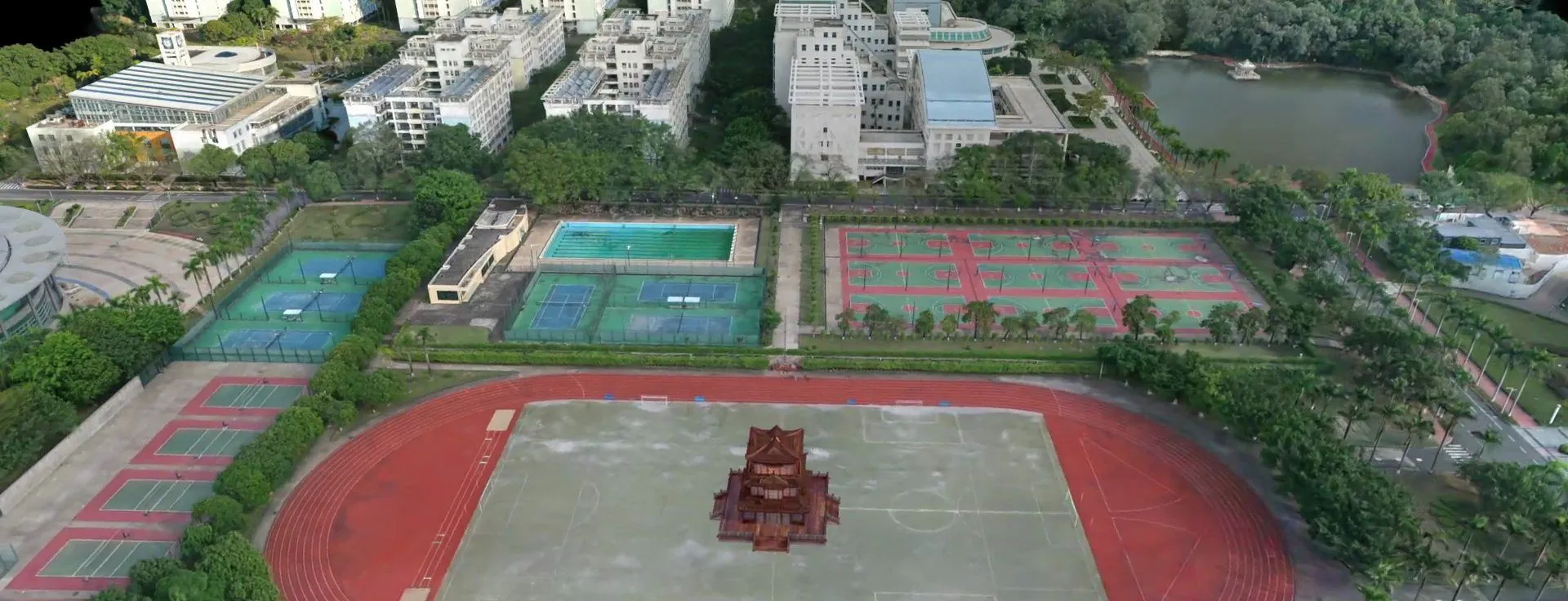
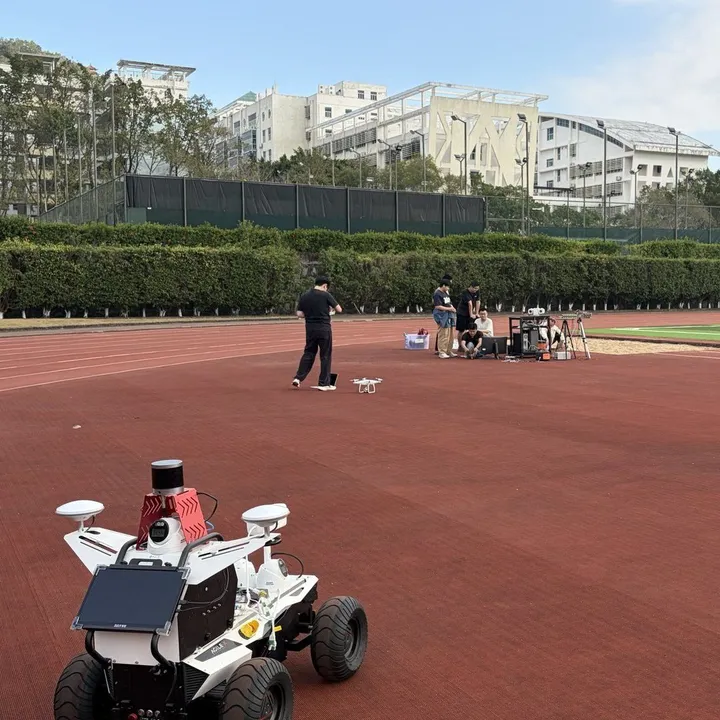
The pavilion in the middle of the field is a 3D model inserted afterwards to show scene editing.
TIMES Lab is based at the School of Intelligent Systems Science and Engineering of Jinan University, on the Zhuhai campus. Professor Guanghua Yang is the director and Professor Zheng Shi the deputy director. The lab has eight faculty members. We supervise Ph.D. and master's students and run research training for undergraduates.
Our three directions build on one another. Spatial intelligence asks how machines understand their surroundings. Intelligent communication asks how useful information can be exchanged when bandwidth and latency are limited. Embodied intelligence tests the models of the first two directions in tactile sensing and dexterous manipulation.
TIMES stands for Trustworthy Intelligence for Multi-space and Embodied Systems.
Each direction has a faculty lead. Graduate and undergraduate students join a direction through a specific project.
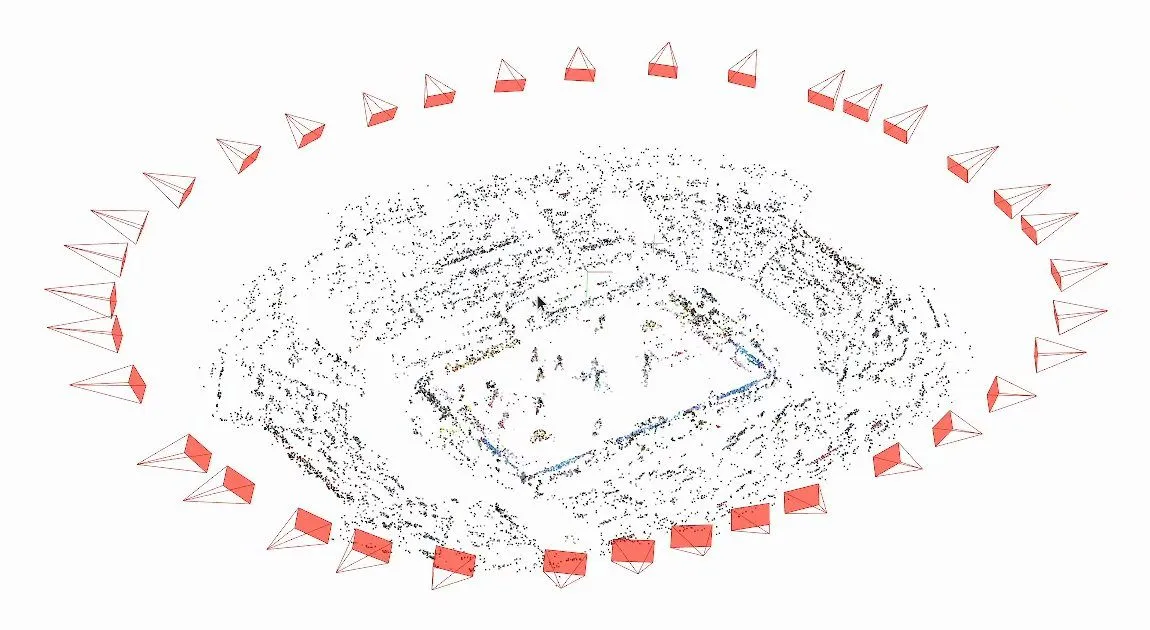
From point-cloud deep learning and self-supervised point-cloud understanding to city-scale 3D reconstruction, we turn images and point clouds into computable spatial structure. We also study video object tracking, person re-identification and perception for autonomous driving.
Research questionHow can city-scale 3D reconstruction maintain both rendering speed and robustness in complex scenes within the memory of consumer-grade GPUs?
Led by Guanghua Yang, with Di Wang and Haozhi Huang
Explore this direction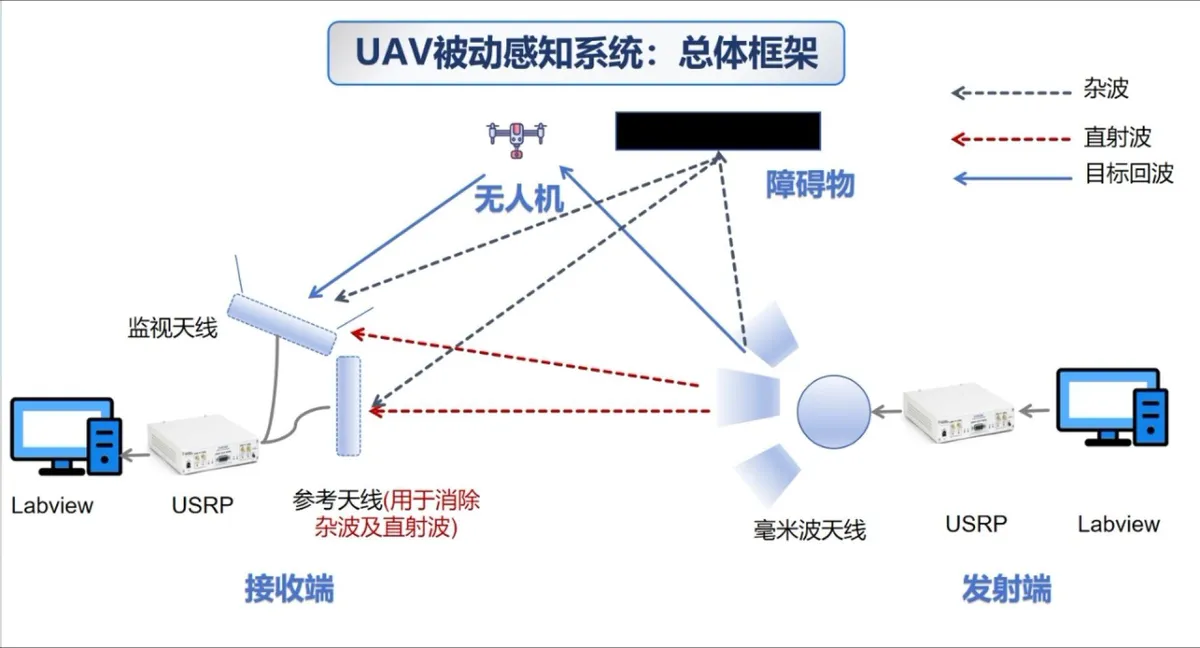
We study URLLC, integrated sensing and communication (ISAC) and semantic communication for 6G, robust beamforming with reconfigurable antennas and intelligent surfaces, and airspace planning and vision-and-language navigation for low-altitude ISAC networks.
Research questionHow can distributed low-altitude ISAC networks stay reliable and robust under cross-layer non-ideal conditions?
Led by Zheng Shi, with Xu Wang and Jintao Wang
Explore this direction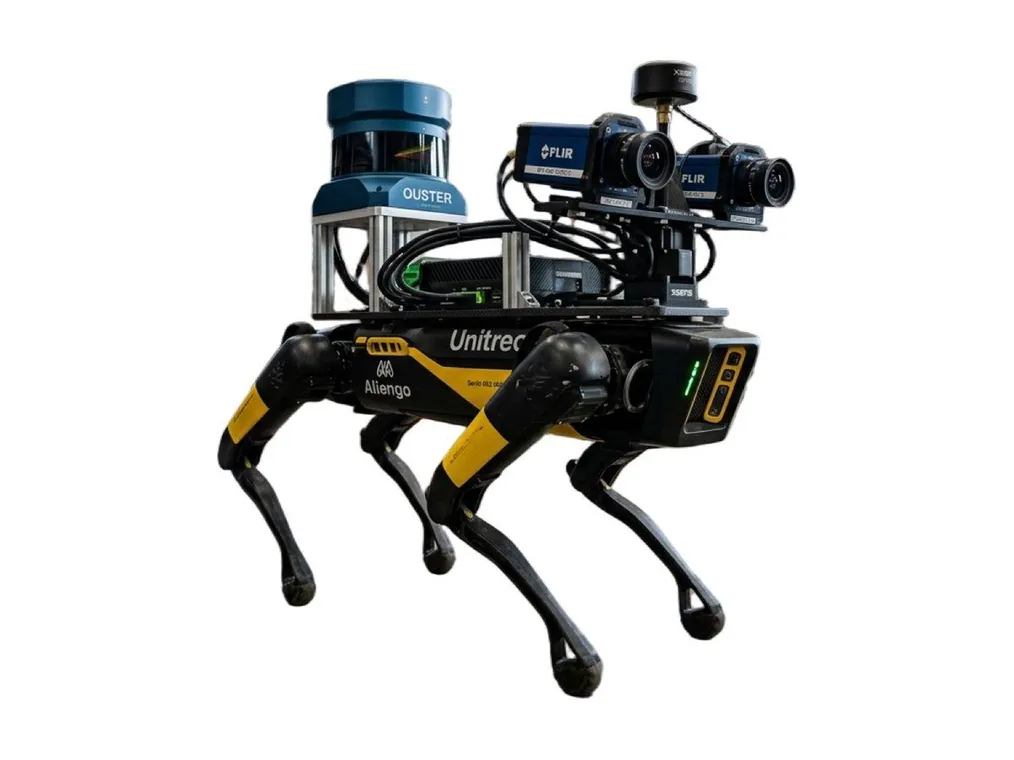
We study 6D object pose estimation, point-cloud processing, vision foundation models and SLAM so that robots can locate themselves and objects in real environments. On top of this we work on multimodal tactile sensing, high-resolution tactile reconstruction and touch-driven dexterous hand control.
Research questionHow can visual pose estimation and tactile feedback work together within a single manipulation task on real workpieces?
Led by Deping Li, with Xiaohua Wu
Explore this directionOur research covers point clouds and 3D reconstruction, 6G and low-altitude communication, semantic information theory, robot vision and tactile manipulation.
 Guanghua YangDirector, TIMES LabSpatial intelligence
 Zheng ShiDeputy Director, TIMES LabCommunication & low-altitudeDi WangLecturer, Master's SupervisorSpatial intelligenceHaozhi HuangLecturerSpatial intelligenceXu WangLecturer, Master's SupervisorCommunication & low-altitudeJintao WangLecturer, Master's SupervisorCommunication & low-altitudeDeping LiLead, Embodied Intelligence; LecturerEmbodied intelligenceXiaohua WuLecturer, Master's SupervisorEmbodied intelligence
International Journal of Extreme Manufacturing (IJEM), 2026
Advanced Science, 2025
IEEE Transactions on Wireless Communications, 2024
Pattern Recognition, 2022
Whether you are applying for graduate study, joining undergraduate research or proposing a collaboration, tell us about your background, the direction you are interested in, and the question you want to work on.